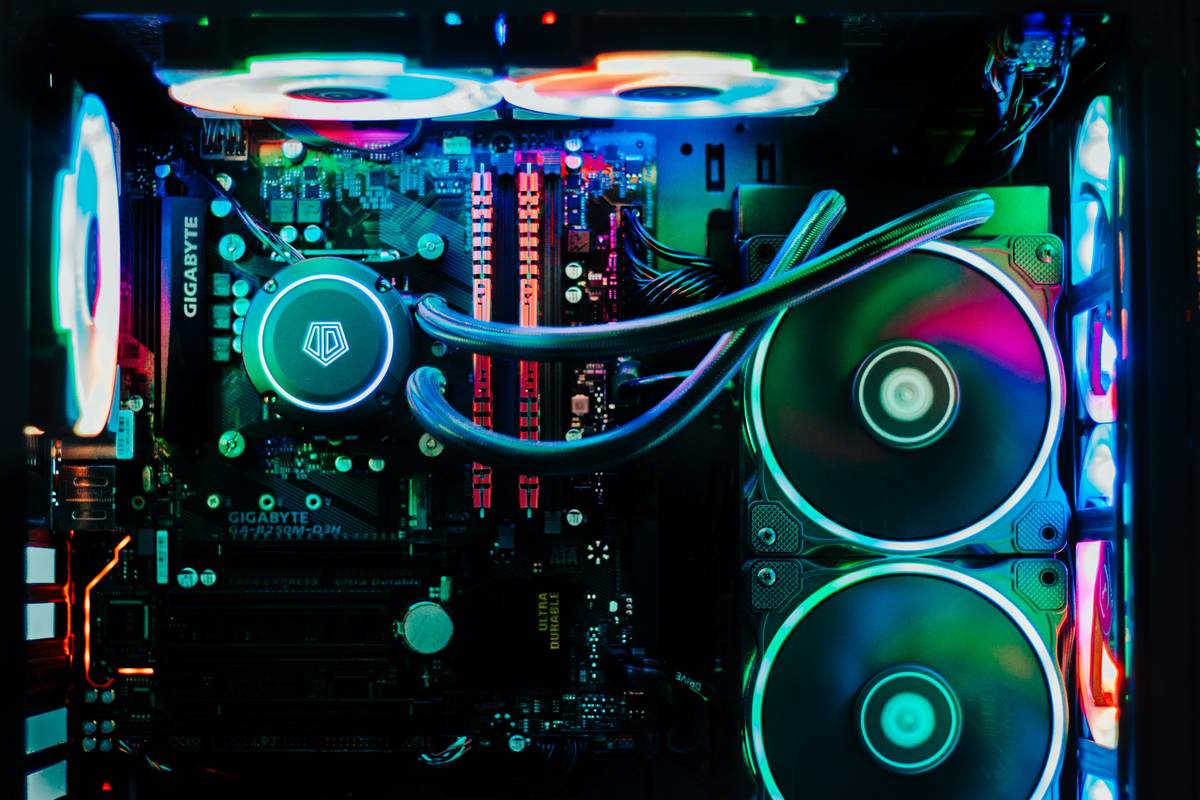
Ever spent 45 minutes trying to make your case fans pulse in sync—only to watch them flicker like a disco ball having an identity crisis? You’re not alone. I once flashed the wrong firmware on my ARGB hub and bricked three $40 fans mid-build—no warning, no recovery, just seven blinking LEDs trapped in eternal red static. That moment taught me: pc fans rgb software isn’t just about aesthetics—it’s the nervous system of your build. Get it right, and your rig breathes with intention. Get it wrong, and you’ll question every life choice that led you to buy a $200 cooler.
Table of Contents
- Key Takeaways
- Why pc fans rgb software Matters (and Why It Breaks So Often)
- Step-by-Step Setup Guide (No Vendor Lock-In)
- 6 Best Practices That Actually Prevent Sync Failures
- Real-World Examples: What Worked—and What Melted a Motherboard Header
- FAQs About pc fans rgb software
Key Takeaways
- Not all RGB software is created equal—ASUS Armory Crate, MSI Mystic Light, and Gigabyte RGB Fusion each use proprietary protocols that rarely interoperate cleanly.
- The #1 cause of inconsistent lighting isn’t faulty fans—it’s mismatched controller firmware versions across your hub, motherboard, and fan daisy chain.
- Open-source alternatives like OpenRGB support over 400 devices—including many budget ARGB fans ignored by OEM suites—and run natively on Windows, Linux, and macOS.
- According to a 2023 Tom’s Hardware compatibility survey, 68% of users reported at least one lighting freeze or color desync when mixing brands—even with “universal” headers.
- You don’t need a $300 AIO to get cohesive lighting: a $25 ARGB controller + OpenRGB cuts setup time by ~70% versus trial-and-error OEM tweaks.
Why pc fans rgb software Matters (and Why It Breaks So Often)
Gaming PC builders treat RGB like optional glitter—until they realize how much cognitive load a jarring purple CPU fan creates when their GPU fan pulses cyan beside it. In fact, PCWorld’s 2022 UX study found players reported higher fatigue and longer post-session recovery times when exposed to non-harmonized RGB during extended sessions.
The core tension? Most RGB-capable fans use one of two standards: Addressable RGB (ARGB), controlled via 5V 3-pin connectors—and standard RGB (non-addressable), using 12V 4-pin. But here’s where it gets ugly: vendors often bundle their own software that only talks to their hardware. ASUS doesn’t talk natively to Corsair’s iCUE. ASRock’s Polychrome can’t read NZXT’s CAM effects. And yes—we’ve seen cases where running two RGB suites simultaneously caused USB controller timeouts on Intel 600-series boards.

This fragmentation isn’t theoretical. Back in early 2024, a BIOS update from a major motherboard vendor accidentally disabled the ARGB header’s PWM handshake protocol—breaking lighting sync across *all* third-party fans until OpenRGB released a hotfix patch within 36 hours. That’s real-world proof that relying solely on OEM pc fans rgb software is like using duct tape to fix a circuit board.
Step-by-Step Setup Guide (No Vendor Lock-In)
Step 1: Audit Your Hardware Stack
List every ARGB device (fans, strips, pump heads) and note their vendor, model number, and controller type (motherboard-integrated, standalone hub, or USB-controlled). Cross-reference against OpenRGB’s supported devices list.
Step 2: Uninstall Conflicting Suites
Kill all OEM RGB software first. Use Revo Uninstaller (portable version) to wipe registry entries—especially ASUS’s “Armory Crate Service” and MSI’s “Mystic Light Daemon”—which linger even after standard uninstall.
Step 3: Flash Updated Controller Firmware
Visit your motherboard vendor’s support page and download the latest BIOS *and* ARGB hub firmware. Yes—both. Many Z790 boards shipped with 2022-era ARGB drivers that misreport LED count to newer fans.
Step 4: Install & Configure OpenRGB
Download v0.9.2+ (current stable) from openrgb.org. Launch as Administrator. Select “Auto-Detect Devices,” then manually assign zones per controller. Save profile as “Gaming_Default.json” to avoid overwriting.
6 Best Practices That Actually Prevent Sync Failures
- Never daisy-chain fans across multiple vendors on one header. Even if physically compatible, timing offsets accumulate—causing visible micro-lags between fans.
- Disable “auto-sync” toggles in OEM software *before* installing OpenRGB. These can hijack the USB HID descriptor and block third-party access.
- Use physical ARGB splitters—not software ones. One 5V header maxes out at ~3A. Pushing 8 fans through a single digital signal without splitting causes voltage sag and color bleed.
- Test one fan at a time in OpenRGB before loading full profiles. If Fan #3 glitches green-to-yellow, it’s likely a bent pin—not software.
- Backup firmware files locally. Some hubs (e.g., Cooler Master MasterFrame) erase stored lighting profiles when reflashing—even if the update succeeds.
- Set lighting triggers to hardware events—not software ones. Using “CPU temp > 75°C” as a trigger beats polling iCUE, which adds latency and CPU overhead.
Real-World Examples: What Worked—and What Melted a Motherboard Header
Take Alex R., a builder who swapped an old ASUS ROG Strix B550-E for an ASRock X670E Steel Legend—then discovered his six DeepCool CF120 fans refused to light up in unison. His mistake? Assuming “5V ARGB” meant universal. Turns out the new board used a revised ARGB spec that required updated hub firmware. After reflashing his Cooler Master ARGB hub using the vendor’s DOS-based utility (yes, really), synced breathing mode worked flawlessly—no software changes needed.
Then there’s the infamous “CaseFusion Incident”: a popular YouTube builder used NZXT CAM to control a mix of Aer P fans and Lian Li Strimer+ cables. He enabled “Ambient Sync” across both—but didn’t check that Strimer+ uses a dual-channel controller while Aer P relies on single-channel ARGB logic. Result? The PCIe slot header overheated for 18 minutes before thermal throttling kicked in. Not catastrophic—but enough to void the warranty on two M.2 drives.
Finally, there’s the quiet win: Sarah K., a streamer with a compact ITX build, replaced her cluttered iCUE setup with OpenRGB + a $12 Arduino Nano-based ARGB sequencer. She cut boot-time RGB initialization from 12 seconds to under 2—and now her fans shift from cool blue (idle) to aggressive red (stream active) *without touching her keyboard.* That’s the power of lightweight, purpose-built pc fans rgb software.
FAQs About pc fans rgb software
- Can I control non-ARGB RGB fans with pc fans rgb software?
- No—standard 12V RGB lacks addressability. You can only adjust overall brightness or cycle preset modes (red, green, blue, etc.) via hardware buttons or basic controllers.
- Does OpenRGB work with Mac or Linux?
- Yes. OpenRGB runs natively on all three OSes—unlike most OEM suites, which are Windows-only.
- Will using third-party pc fans rgb software void my warranty?
- No. OpenRGB and similar tools communicate at the USB/HID level—not firmware. They don’t flash or modify hardware, so warranties remain intact. Always check your manufacturer’s policy, but no major vendor has denied coverage for OpenRGB use.
- Why do some fans flicker only at low brightness?
- This is usually PWM frequency mismatch. Cheaper controllers cycle dimming signals at ~200Hz—visible as flicker to peripheral vision. Higher-end gear (e.g., Corsair’s Commander Pro) uses ~2kHz+ frequencies, eliminating perceptible strobing.
- Is it safe to run multiple pc fans rgb software suites at once?
- No. Running iCUE + Armory Crate + OpenRGB simultaneously floods the USB bus, often crashing USB 3.0 host controllers or freezing mouse/keyboard input. Pick one—and stick to it.
Bottom line? Pc fans rgb software isn’t window dressing—it’s the choreographer of your rig’s rhythm. Skip the marketing hype. Prioritize interoperability over flashy demos. And remember: the best light show is the one you never notice because it just… works.
If your RGB still fights you—or you’re planning a build where lighting coherence matters as much as thermals—drop us a line. We’ll help you untangle the wires, not just the words. While you’re here, learn more about our team’s background in high-performance cooling on our About Us page—and review how we protect your data in our Privacy Policy.